
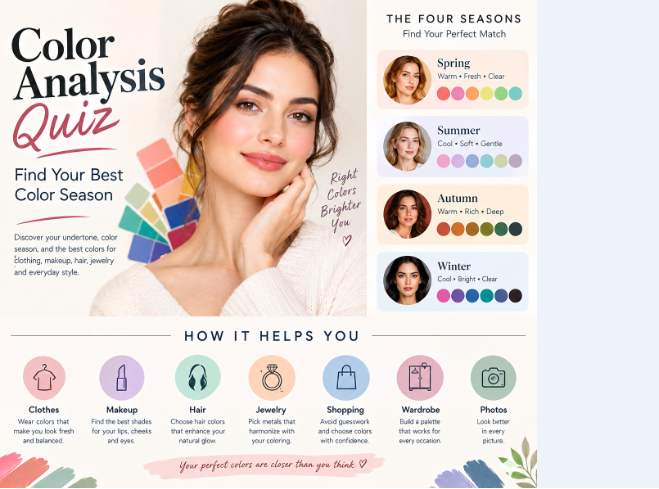
Have you ever put on a color that instantly made your skin look brighter and your eyes stand out? Then you have already seen how much color can change the way you look.
A color analysis quiz can help you understand why some shades seem to suit you naturally while others make your complexion look dull or unbalanced. It looks at clues such as your skin undertone, natural hair color, eye color, and the contrast between your features.
The result can help answer the question many people really want to know: What is my color season, and which colors look best on me?
Once you know your likely season, you can use it as a practical guide for choosing clothes, makeup, hair colors, jewelry, and accessories.
What Is a Color Analysis Quiz?
A color analysis quiz is an online questionnaire designed to help identify the colors that may harmonize with your natural appearance. Instead of asking which colors you personally like, it focuses on characteristics such as undertone, depth, clarity, contrast, hair, and eyes.
Most seasonal systems group people into Spring, Summer, Autumn, or Winter, while more detailed systems divide these groups into smaller sub-seasons. Your answers are compared with the characteristics of those palettes to suggest your closest match.
The idea is simple: rather than buying clothes or makeup based only on what looks attractive on a shelf or screen, you get a better starting point for finding shades that work with your own coloring.
How Does a Color Analysis Quiz Work?
A useful quiz looks at several features together rather than deciding your season from one clue. Different tools may use slightly different methods, but common questions cover undertone, natural hair, eyes, jewelry, sun response, skin depth, and overall contrast.
Skin Undertone
Your skin tone and undertone are two different things.
Skin tone describes the visible depth of your complexion, such as light, medium, tan, or deep. Undertone refers to the subtle warm, cool, or neutral quality underneath the surface.
Warm undertones often have golden, peach, or yellow qualities. Cool undertones can appear pink, rosy, or bluish. Neutral coloring may show a balance between warm and cool characteristics.
Some people also have olive coloring, which does not always fit neatly into a simple warm-or-cool description.
Natural Hair Color
Your natural hair color provides another useful clue.
A quiz may consider both the depth and tone of your hair. For example, hair can be light or deep, and it may appear golden, reddish, neutral, or ashy.
If you currently color or highlight your hair, think about your natural hair when answering this type of question. Artificial color can change the overall impression of your appearance.
Eye Color and Clarity
Eye color is more than simply choosing blue, green, brown, or hazel.
Some color analysis systems also consider whether your eyes appear bright, soft, clear, muted, light, or deep. Flecks and variations within the iris may provide additional clues.
Your eye color should not determine your season by itself. It works together with your skin, hair, and overall coloring.
Overall Contrast
Contrast describes how much visual difference exists between your natural hair, skin, and eyes.
Someone with very dark hair and much lighter skin may have relatively high contrast. Someone whose features are similar in depth may have softer contrast.
This matters because some people look better in vivid, clearly defined colors, while others are more naturally complemented by softer or muted shades.
What Is My Color Season?
Your color season is a broad description of the colors that may harmonize with your natural coloring.
The four traditional seasons are Spring, Summer, Autumn, and Winter. Each has different combinations of temperature, depth, clarity, and contrast.
Spring: Warm, Fresh, and Clear
Spring palettes are generally warm, fresh, and lively.
Colors to explore include:
- Coral
- Peach
- Warm pink
- Light turquoise
- Fresh green
- Warm yellow
- Creamy ivory
If warm and clear shades make your complexion look fresh rather than heavy, Spring may be worth exploring.
Summer: Cool, Soft, and Gentle
Summer palettes generally lean cool, soft, and lighter.
Common examples include:
- Dusty rose
- Lavender
- Soft blue
- Cool pink
- Mauve
- Soft gray
- Muted berry
If gentle colors blend naturally with your features and strong shades feel overpowering, Summer may be a possible match.
Autumn: Warm, Rich, and Earthy
Autumn palettes are usually warm, rich, and earthy.
Think about shades such as:
- Rust
- Terracotta
- Olive
- Mustard
- Warm brown
- Burnt orange
- Deep teal
If earthy colors make your complexion appear balanced and your features look more defined, Autumn may be a strong possibility.
Winter: Cool, Deep, and Clear
Winter palettes generally work with cool, clear, and stronger colors.
Examples include:
- Black
- Pure white
- Emerald
- Ruby red
- Deep blue
- Cool pink
- Jewel tones
If crisp colors make your features look clearer and more defined, Winter may be worth considering.
These descriptions are only a starting point. A detailed color analysis can place someone in a more specific sub-season.
What Colors Look Best on Me?
This is where a color analysis quiz becomes useful in everyday life. Your season is not just a label. It can give you a starting palette for clothing, makeup, accessories, and other style choices.
| Color Season | Colors to Explore |
| Spring | Peach, coral, warm pink, turquoise, fresh green |
| Summer | Lavender, dusty rose, soft blue, mauve, muted berry |
| Autumn | Rust, olive, terracotta, mustard, warm brown |
| Winter | Black, pure white, emerald, ruby, deep blue |
Remember that a color family can contain many different versions.
For example, saying “blue suits me” does not mean every blue will have the same effect. Navy, powder blue, turquoise, cobalt, and icy blue have very different qualities.
Your goal is to discover which version of a color works best with your natural coloring.
Best Clothing Colors
Clothing colors that sit close to your face can have the biggest visual impact.
Try comparing two similar shades in natural daylight. Look at your skin rather than the clothing itself.
A flattering shade may make your complexion appear clearer and your eyes more noticeable. A less harmonious shade may emphasize shadows or make your face appear tired.
You do not need to remove every “wrong” color from your wardrobe. If you love a color that is outside your palette, you can still wear it as a lower-body piece, bag, shoe, or other accessory.
Best Makeup Colors
Your color season can also help when choosing makeup.
You can explore different families of:
- Lipstick
- Blush
- Eyeshadow
- Eyeliner
- Nail colors
For example, warm coloring may enjoy peach, coral, or terracotta families, while cool coloring may prefer berry, mauve, or cool pink shades.
The goal is not to follow a rigid makeup rule. It is to reduce guesswork and give you better shades to experiment with.
Best Hair Colors
Hair color can change the overall balance of your appearance, so your color palette can be useful when considering a new shade.
Warm coloring may harmonize with certain golden, caramel, copper, or warm-brown shades. Cooler coloring may prefer ash, cool brown, or other cooler-looking shades.
Still, your natural hair, skin, eyes, and personal style all matter. A quiz should provide ideas, not make the decision for you.
Best Jewelry and Accessories
Jewelry is another simple way to test your color harmony.
Try gold, silver, rose gold, or other finishes near your face in natural light. Notice which one makes your complexion look lively rather than dull.
The same idea can be used for scarves, glasses, hats, handbags, and other accessories.
What Questions Are Asked in a Color Analysis Quiz?
Quiz questions vary from one tool to another, but the strongest ones usually focus on observable features rather than personal preferences.
You may be asked about:
- Vein color
- Skin undertone
- Natural hair color
- Eye color and clarity
- Gold or silver jewelry
- Reaction to sunlight
- Skin depth
- Contrast between hair, skin, and eyes
- Whether bright or muted colors suit you
- Whether light or deep shades look better
Some tools use a questionnaire, while others use photographs or selfies to assess characteristics such as hue, value, and chroma.
For the most useful result, answer according to your natural appearance, not the colors you simply enjoy wearing.
How to Get a Better Color Analysis Quiz Result?
A few simple steps can make your answers more consistent.
Use Natural Daylight
Natural daylight is generally better for judging subtle differences in skin, hair, and color. Strong indoor lighting can make warm or cool qualities appear different.
Avoid Heavy Makeup
Foundation, bronzer, blush, and strong eye makeup can change the appearance of your natural coloring. If possible, take the quiz with little or no makeup.
Consider Your Natural Hair
If your hair is dyed, highlighted, or bleached, use your natural hair color when the quiz specifically asks about your original coloring.
Use Your Real Features
Do not choose an answer because you think it sounds better. The quiz is trying to understand your actual coloring.
Test the Result Yourself
After receiving your season, compare several recommended colors near your face.
If the result repeatedly makes sense in real life, you can gradually use those colors when shopping and getting dressed.
4-Season vs. 12-Season Color Analysis
The four-season system gives you a simple starting point:
Spring → Summer → Autumn → Winter
A 12-season system provides more detail by dividing each major season into related sub-seasons. For example, someone may receive a result such as Light Spring, True Spring, or Bright Spring rather than simply Spring.
This can be useful when your coloring sits between broad categories or when one four-season result feels too general.
Some systems go even further with 16-season approaches. The important thing is not choosing the system with the most labels. What matters is whether the result gives you useful, consistent guidance about the colors that actually work for you.
How Accurate Is an Online Color Analysis Quiz?
An online color analysis quiz can be helpful, but it should be treated as a guide rather than an absolute measurement.
Lighting, makeup, hair dye, camera quality, screen settings, and subjective answers can all affect the result. Photo-based tools have their own limitations, while professional analysis may involve direct comparison of fabrics against the face.
Even brands offering online tools acknowledge different approaches: for example, some quizzes use self-reported natural features, while other tools use a selfie to analyze color characteristics.
That does not make an online quiz useless. It simply means you should confirm the result by trying the recommended colors yourself.
If several shades from your suggested palette consistently make your complexion look brighter and more balanced, that is useful evidence that the palette is working for you.
How to Use Your Color Season in Everyday Life?
Once you know your likely season, the next step is simple: start using it where it makes your life easier.
You do not need to replace your wardrobe or throw away makeup that you already love. Think of your palette as a shopping filter that helps you make faster and more confident choices.
Build a Simple Clothing Palette
Choose a few reliable neutrals and several accent colors from your season.
Use the neutrals for everyday basics and the stronger colors for tops, dresses, scarves, or other pieces near your face.
Over time, you may find that more of your wardrobe works together naturally.
Make Makeup Shopping Easier
When choosing lipstick, blush, or eyeshadow, compare shades within your color family.
Instead of buying a product because its packaging looks appealing, look at how the actual shade works with your complexion.
Use Your Palette Before Changing Your Hair
If you are thinking about changing your hair color, check whether the proposed shade works with your overall coloring.
A small shift in warmth or depth can sometimes make a noticeable difference.
Experiment With Accessories
Accessories are low-risk ways to explore color.
Try different metals, scarves, glasses, and bags. You can discover what works without changing your entire appearance.
Common Color Analysis Mistakes to Avoid
Color analysis becomes much more useful when you avoid a few common mistakes.
Mistake 1: Choosing a season from skin tone alone.
Your skin depth is only one part of your overall coloring.
Mistake 2: Using dyed hair as your natural reference.
Artificial hair color can change the visual balance of your features.
Mistake 3: Taking the quiz under poor lighting.
Colored or very warm indoor light can make subtle differences difficult to see.
Mistake 4: Confusing favorite colors with flattering colors.
You can love a color without it being the shade that complements you most.
Mistake 5: Treating your palette like a strict rulebook.
Color analysis should give you more confidence and options, not make fashion stressful.
Faqs
Look at the veins on the inside of your wrist under natural sunlight. Which color do they primarily appear to be?
Look at your veins in clear natural daylight and notice their dominant appearance. They may look blue, purple, green, or somewhere between these colors. Vein color can provide a clue about undertone, but it should not be used alone to determine your complete color season.
When trying on jewelry, which metal type makes your skin look brightest, healthiest, and most vibrant?
Compare gold, silver, and other metal finishes close to your face in natural light. If gold makes your complexion appear warmer and more lively, it may be a useful clue toward warm coloring. If silver looks clearer and more harmonious, you may lean cooler. If both work well, your coloring may be more neutral.
Which of the following best describes the depth and clarity of your eyes?
Look at your natural eyes and consider both their depth and clarity. Ask whether they appear light or deep and whether they look bright and clear or soft and muted. Eye color should be considered alongside your skin, hair, and overall contrast.
What is your natural hair color depth and tone (without artificial highlights or dye)?
Think about the hair color you naturally grow rather than your current dyed or highlighted shade. Consider whether it is light, medium, or deep and whether it appears warm, cool, golden, reddish, neutral, or ashy.
With no makeup on, how would you describe the contrast level between your hair, skin, and eyes?
Look at your natural features together. A strong difference in depth between your hair, skin, and eyes usually creates higher contrast. When those features are closer in depth and blend more gently, the overall contrast is lower.
Conclusion
Finding your color season is not about creating a list of colors you are forbidden to wear. It is about understanding which shades are most likely to work naturally with your features.
A color analysis quiz can give you a useful starting point by looking at undertone, hair, eyes, depth, and contrast. Once you have a result, test it in real life.
Try different clothing colors near your face. Experiment with makeup and jewelry. Compare similar shades rather than judging an entire color family as simply “good” or “bad.”
The best result is one that makes color choices easier, helps you shop with more confidence, and lets your personal style feel more like you.