
1. What Is a Fake Name Generator?
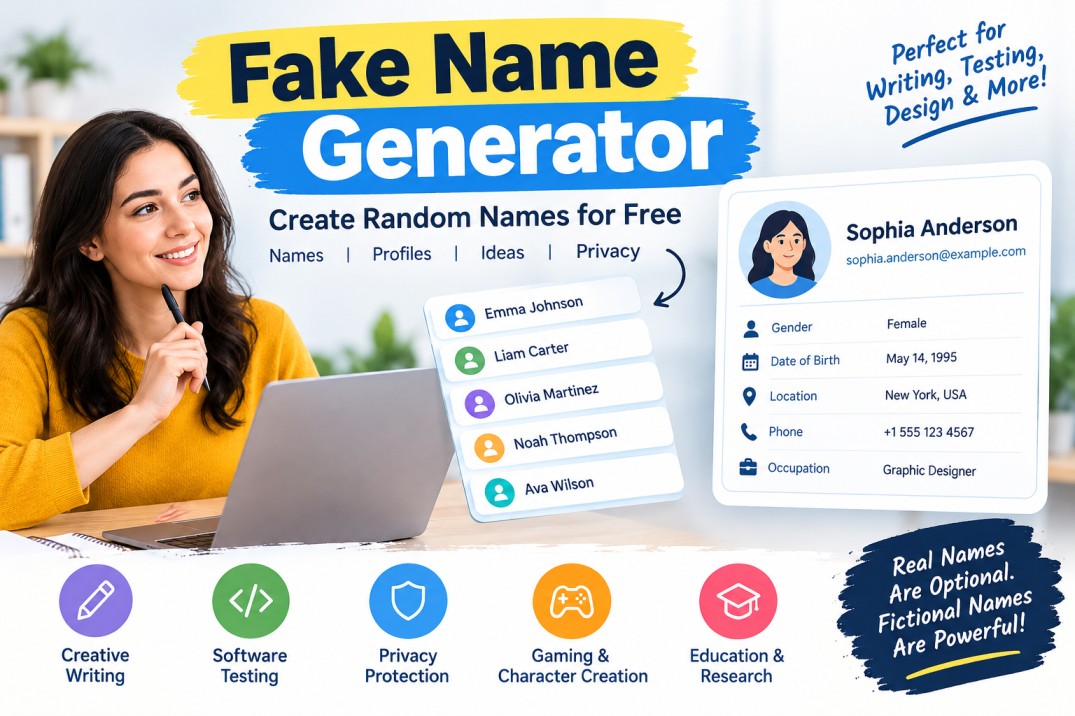
A fake name generator is an online tool that automatically creates fictional names for different purposes. It can generate first names, last names, and complete names within seconds. Writers, students, developers, and gamers use these tools to find naming ideas without spending unnecessary time brainstorming every possibility themselves.
Depending on the website, users can customize generated names by country, language, gender, or naming style. Some tools also provide fictional usernames and sample profile information. These features make a random name generator useful for creative writing, educational projects, website demonstrations, and software testing where realistic-looking placeholder information is needed.
- Generate random full names.
- Discover international naming styles.
- Create fictional character identities.
- Find username inspiration.
- Develop gaming characters.
- Prepare sample database records.
- Support educational activities.
- Save time generating name ideas.
2. How Does a Fake Name Generator Work?
A fake name generator generally relies on predefined name lists, databases, or algorithms to combine first names and surnames. More advanced tools may organize names according to regional naming patterns or language preferences. The results depend on the available database, customization settings, and the method used to select different name combinations.
Using an online name generator is usually straightforward. Visit the website, choose any available preferences, and select the generate option. The tool displays one or more suggested names that you can review and copy. Some generators also support bulk creation, making them useful for projects that require numerous fictional names.
- Visit a name generator website.
- Select your preferred settings.
- Choose a country or region.
- Pick a naming style.
- Generate random name combinations.
- Review the available suggestions.
- Copy your preferred result.
- Repeat to discover alternatives.
3. Essential Features of a Fake Name Generator
A good fake name generator offers convenient features for creating suitable fictional names. Depending on the service, users may choose regional naming styles, customize preferences, or generate several results simultaneously. These options help writers, designers, and developers find names that match their projects without repeatedly creating combinations manually.
Some platforms also provide username ideas, fictional addresses, sample birth dates, or bulk data generation. Such features can be useful for fictional character development and software testing. However, not every website includes these capabilities, so users should compare available functions before selecting a generator for personal, educational, or professional purposes.
- Random first names and surnames.
- Country-based naming options.
- Multiple name suggestions.
- Customizable generation settings.
- Fictional username ideas.
- Bulk name generation.
- Easy copying and pasting.
- Optional sample profile details.
4. Benefits of Using a Fake Name Generator
One of the biggest advantages of a fake name generator is convenience. Creating suitable names manually can take considerable time when a project involves many characters or sample records. An automated generator produces ideas quickly, helping users concentrate on more important tasks such as writing stories, designing applications, or preparing educational materials.
Another benefit is reducing unnecessary exposure of real personal information. Fictional names can replace actual names in demonstrations, practice documents, and sample datasets when genuine identities are not required. Nevertheless, a generated name does not guarantee complete privacy, particularly if other identifying information is included alongside it.
- Save time during brainstorming.
- Generate multiple names quickly.
- Develop memorable fictional characters.
- Create placeholder database records.
- Support classroom exercises.
- Improve website demonstrations.
- Reduce unnecessary use of personal details.
- Simplify repetitive naming tasks.
5. Popular Uses of a Fake Name Generator
A fake name generator can support a wide range of creative and professional activities. Authors use random names when developing characters for novels, short stories, and scripts. Game designers can create identities for fictional characters, while teachers can prepare quizzes, worksheets, and classroom exercises using examples that do not reveal real students’ information.
Developers and website designers also use fictional names when building prototypes, testing registration forms, and demonstrating database interfaces. Placeholder identities help make sample applications appear more realistic before real data is introduced. For professional testing, keep generated information clearly labeled as test data and avoid confusing fictional records with genuine customer information.
- Create names for fictional stories.
- Develop role-playing game characters.
- Test website registration forms.
- Populate sample spreadsheets.
- Prepare educational worksheets.
- Demonstrate business applications.
- Design website prototypes.
- Build fictional case studies.
6. Fake Name Generator for Privacy and Safety
A fake name generator can help users limit unnecessary exposure of personal information in low-risk situations. For example, a designer can use fictional names in portfolio screenshots, while a developer can create placeholder identities for testing. Using fictional information in these situations can help keep actual names out of public demonstrations and sample materials.
However, a fictional name does not automatically make someone anonymous online. Websites may still collect IP addresses, cookies, device information, or other technical data. Some platforms also require accurate identity information for legal or security purposes. Review privacy policies, protect sensitive details, and never use generated identities to commit fraud or impersonate real people.
- Avoid sharing sensitive personal details.
- Review privacy policies before use.
- Use fictional names in demonstrations.
- Keep test accounts separate.
- Never impersonate real individuals.
- Do not share passwords with generators.
- Follow legitimate identity requirements.
- Use secure testing environments.
7. How to Choose the Best Fake Name Generator
Choosing the right fake name generator starts with understanding your needs. Writers may prefer diverse international names, while developers may require bulk generation and downloadable sample data. Beginners often benefit from simple navigation, fast results, and clear customization options. Selecting a suitable tool makes the naming process more convenient and productive.
Before using a service, examine its privacy policy, available features, and terms of use. Check whether registration is necessary and whether the website requests unnecessary personal information. If you plan to use generated names commercially, review the relevant terms. For complex software projects, consider synthetic-data tools that offer additional control over sample records and formats.
- Choose an easy-to-use interface.
- Compare available customization settings.
- Check international name support.
- Review privacy and security practices.
- Look for bulk generation options.
- Verify export capabilities.
- Avoid suspicious downloads.
- Match features to your project.
8. Frequently Asked Questions About Fake Name Generators
Many beginners wonder whether a fake name generator is free, safe, or suitable for professional use. Numerous websites provide basic name generation without charge, although some offer premium features or require registration for advanced functions. Availability varies by provider, so check the website’s current pricing, features, and usage conditions before relying on it.
Users also ask whether generated names are unique or belong to real people. Because generators often combine common first names and surnames, their results can occasionally match existing individuals. Treat the output as fictional inspiration rather than a verified identity. For software development, use clearly designated test records and validate your data before deploying an application.
- What is a fake name generator? It is an online tool for creating fictional names.
- Is a fake name generator free? Many websites provide free basic functionality.
- Can I use generated names in stories? Yes, they are useful for fictional characters.
- Are generated names always unique? No, they may match real people’s names.
- Can developers use these tools? Yes, for suitable testing and demonstrations.
- Can I generate names from other countries? Some tools support regional and international names.
- Does a fake name guarantee anonymity? No, other information may still identify you.
- Can I use fictional identities everywhere? No, follow applicable laws and platform requirements.
Conclusion
A fake name generator is a useful online resource for creating fictional names quickly and conveniently. Whether you are writing a story, developing a game, preparing educational materials, or testing software, it can help you discover naming ideas without spending hours brainstorming individual names. For the best results, choose a generator that matches your requirements, check its privacy practices, and use the results responsibly. Remember that generated names may resemble real people’s names and do not automatically provide anonymity. When used appropriately, a random name generator can improve creative workflows, simplify software testing, and reduce unnecessary reliance on real personal information.